What Does a Degree Do for Your Career?
A university degree represents sustained effort. It gives students a foundation in their field and shows that they can work toward a long-term goal. For many careers, it can also help them qualify for opportunities that would otherwise be difficult to access.
But a degree is only part of what employers consider. Once an opportunity opens, graduates need to show how they use what they have learned. Can they solve a problem, explain an idea, work with others, and respond when circumstances change?
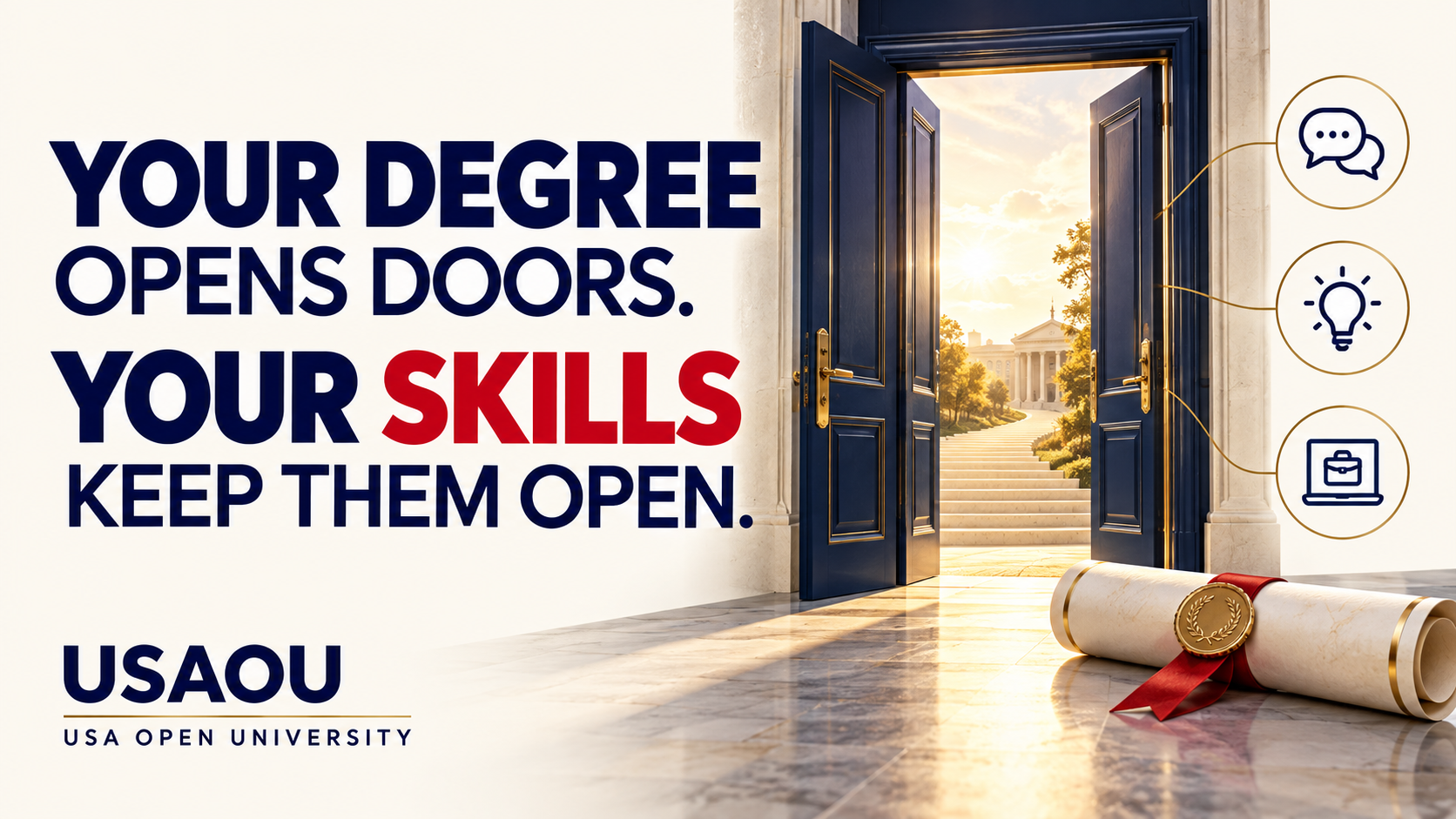
A degree can help open the door. Skills help you make the most of what lies beyond it.
Why Do Employers Look Beyond Qualifications?
Work rarely follows a textbook. A project may change direction, a client may have an unexpected need, or a team may need to learn a new tool. Academic knowledge matters in these situations, but applying it requires judgment and collaboration.
That is why employers also look for evidence of how candidates work. They want to know whether someone can ask useful questions, communicate clearly, take responsibility, and keep learning. These abilities matter during hiring, and they continue to matter as a person takes on new responsibilities.
The question is not whether a degree or skills matter more. Career preparation depends on both: knowledge provides a foundation, while skills help graduates put it to work.
Which Skills Support Long-Term Career Growth?
The skills a person needs will vary by profession, but several are useful across fields:
- Critical thinking helps you assess information and make reasoned decisions.
- Communication helps you explain ideas, listen to others, and avoid misunderstandings.
- Problem solving helps you identify an issue and work toward a practical response.
- Teamwork and leadership help you contribute to shared goals and support others.
- Adaptability helps you respond when tools, expectations, or circumstances change.
- Time management helps you meet commitments and balance competing priorities.
- Digital literacy helps you use technology thoughtfully and effectively.
- Professional ethics helps you consider the consequences of your actions.
- Continuous learning helps you develop as your field evolves.
These skills are connected. Solving a problem may require technical knowledge, careful analysis, and a clear explanation to the people affected by the decision.
How Does Knowledge Become Practical Impact?
Education gives students concepts, methods, and subject knowledge. Professional work asks them to apply those resources in real situations.
A business graduate may understand a strategy but still need to present it clearly to a team. A healthcare professional needs to combine knowledge with careful communication and sound judgment. An educator must adapt an explanation to the students in front of them. An engineer may need to work with colleagues from several disciplines to turn a design into a workable solution.
In each case, knowing the subject is essential. The impact comes from using that knowledge well.
Why Does Learning Continue After Graduation?
Graduation marks an achievement, but professional development continues. Tools change, new questions arise, and people discover areas where they need to grow.
Continuing to learn can take many forms: seeking feedback, practicing a skill, studying an emerging technology, earning a relevant credential, or learning from colleagues. The aim is to remain capable and curious throughout a career.
Graduates who build that habit are better prepared to take on unfamiliar work and pursue new opportunities.
How Can Higher Education Prepare Students?
Universities can help students build knowledge and practice applying it. Discussion, research, projects, and feedback give learners opportunities to evaluate ideas, communicate their reasoning, and work through challenges.
At USA Open University, flexible online learning is designed to help students pursue their education while balancing work, family, and other responsibilities. As students build knowledge in their chosen fields, they can also strengthen the habits that support professional growth: independent learning, critical thinking, and adaptability.
The goal extends beyond completing a degree. It is to prepare learners to keep developing and contributing after graduation.
Final Thoughts
A degree can create opportunities and provide a strong foundation for a career. What happens next depends on how a graduate applies that knowledge, works with others, and continues to grow.
Keep building the skills that help you act on what you know. Your degree opens doors. Your skills keep them open.